Adding dechlorination chemistry does not by itself confirm that the treatment target has been reached.
The remaining chlorine has to be measured.
That measurement can be as simple as a field test strip or as sophisticated as a continuously operating process analyzer connected to a treatment-control system.
Choosing the right testing equipment depends on the type of chlorine being measured, the expected concentration, how often measurements are needed and whether the instrument will be used in the field or installed permanently.
Field Test Strips
Test strips are the simplest tools in this category.
They are particularly useful where a field crew needs a quick indication of residual chlorine without carrying a larger instrument.
Typical uses include:
- hydrant flushing;
- water-main work;
- temporary discharge;
- routine field checks.
Advantages include portability, low equipment cost and minimal setup.
Their limitations should also be recognized.
A test strip does not provide the same analytical capability, repeatability or automated recording as a dedicated colorimeter or online analyzer.
They are best considered a field-verification tool rather than a substitute for every form of chlorine measurement.
Portable Colorimeters
Portable colorimeters provide a more instrument-based approach while remaining suitable for field use.
Many use DPD chemistry to determine free or total chlorine.
These instruments can be useful for:
- utility field work;
- contractor testing;
- wastewater grab samples;
- commissioning;
- maintenance checks.
Unlike a permanently installed analyzer, a portable colorimeter can be carried between locations.
Buyers should compare:
- free versus total chlorine capability;
- published measurement range;
- reagent requirements;
- instrument protection;
- battery operation;
- sample volume;
- display and data features.
Continuous Chlorine Analyzers
Continuous analyzers are designed for processes where occasional spot checks are not sufficient.
The instrument repeatedly samples or measures the water and provides ongoing information about chlorine residual.
Common applications include:
- drinking-water treatment;
- wastewater;
- industrial process water;
- cooling-water discharge;
- dechlorination control;
- membrane pretreatment.
These instruments are more complex than portable colorimeters.
They may require:
- reagent replacement;
- sample conditioning;
- cleaning;
- calibration;
- electrical power;
- signal integration.
Their advantage is that the operator receives repeated measurements rather than isolated snapshots.
Free Chlorine Versus Total Chlorine
Buyers should determine what parameter actually needs to be measured before choosing an instrument.
Free chlorine refers primarily to chlorine available in forms such as hypochlorous acid and hypochlorite.
Total chlorine includes free chlorine plus combined forms.
Some industrial applications may instead monitor total residual oxidants.
An instrument designed only for free chlorine may therefore be inappropriate where total residual chlorine is the required parameter.
Product pages should clearly identify what each instrument measures.
Measurement Range Matters
An instrument used before treatment can require a very different measurement range from one being used to confirm a very low residual after dechlorination.
Some continuous analyzers are intended for broader treatment-process ranges.
Others are specifically designed for ultra-low residual measurement.
When evaluating instruments, compare the manufacturer's published:
- range;
- resolution;
- detection capability;
- accuracy;
- sample requirements.
Do not assume a wider range automatically means a better analyzer. The appropriate range depends on the application.
Reagents and Ongoing Operating Cost
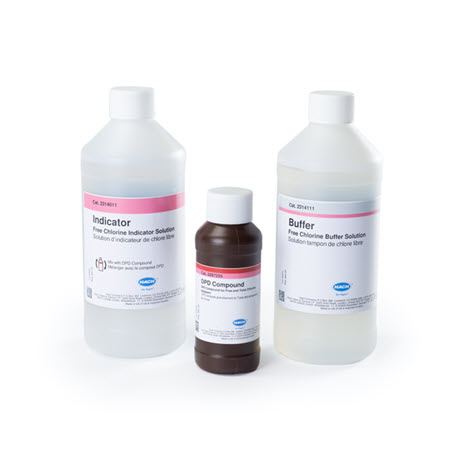
Many colorimetric instruments use consumable reagents.
This means instrument purchase price is only part of the operating cost.
Buyers should check:
- reagent type;
- expected replacement frequency;
- reagent package size;
- shelf life;
- availability;
- maintenance kits.
For frequently operating instruments, reagent cost and maintenance requirements can become significant over the life of the analyzer.
Products to Compare
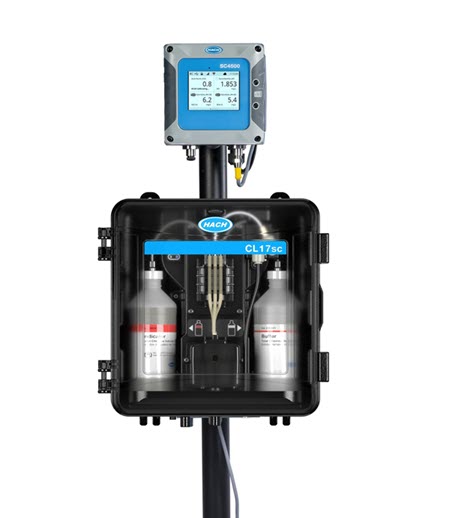
Hach CL17sc
The CL17sc is a continuous colorimetric chlorine analyzer available for free- or total-chlorine monitoring.
It is more naturally suited to ongoing process measurement than to occasional field checks.
Buyers should compare its measurement range, reagent requirements, maintenance schedule and controller integration.
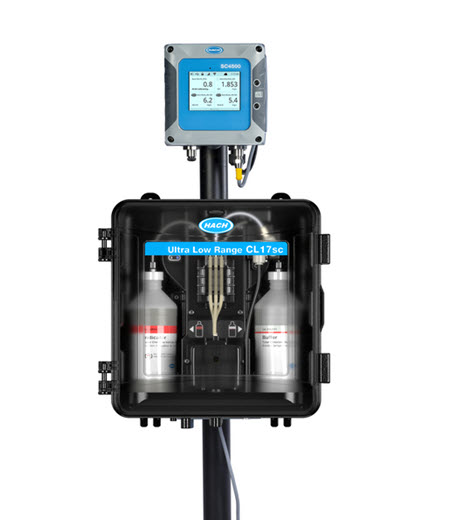
Hach Ultra Low Range CL17sc
The Ultra Low Range version is aimed at situations where measuring very low chlorine residual is especially important.
It should therefore be treated as a separate functional product rather than merely another CL17sc package configuration.
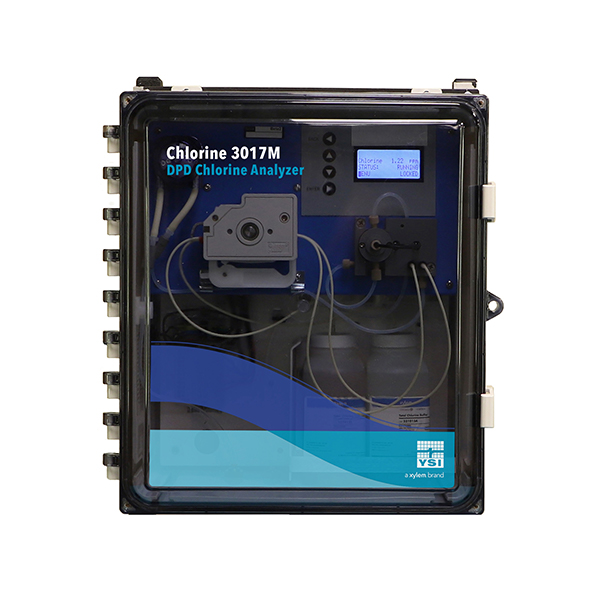
YSI 3017M
The YSI 3017M is another continuous DPD chlorine analyzer.
It can be configured for free or total chlorine and is relevant to drinking-water and wastewater applications.
It provides an alternative platform for buyers comparing permanently installed colorimetric analyzers.
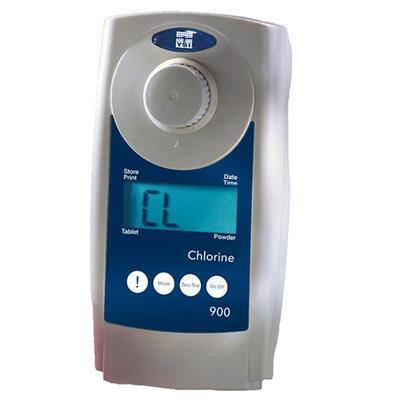
YSI 900 Chlorine Colorimeter
The YSI 900 is a portable instrument and should be compared with handheld and field colorimeters rather than continuous analyzers.
Its portability makes it more appropriate where measurements are taken manually at several locations.
Thermo Scientific Orion 7070iX
The Orion 7070iX is designed for total residual oxidant monitoring.
It occupies a more industrial process-monitoring role than small field instruments.
Orion AQUAfast AQ3170
The AQUAfast AQ3170 provides a portable colorimetric option within the Thermo Scientific product range.
It is useful for spot testing without installing a permanent analyzer.
SenSafe Free Chlorine Test Strips
Test strips remain relevant for crews that prioritize simplicity and portability.
They should be evaluated according to the measurement range and intended field use rather than compared directly with process analyzers on sophistication.
What Type of Testing Product Should You Buy?
Choose field strips when:
- portability is the main priority;
- measurements are occasional;
- a simple field indication is appropriate.
Consider a portable colorimeter when:
- a numerical reading is preferred;
- several locations need to be tested;
- permanent installation is unnecessary.
Consider a continuous analyzer when:
- the treatment process operates continuously;
- residual chlorine needs ongoing supervision;
- measurement data may be used for process control or reporting.
The testing method should match the consequences of the measurement.
A quick hydrant check and continuous wastewater dechlorination monitoring are both chlorine-testing applications, but the instrumentation requirements are very different.